




Staff wellbeing strategy: a practical leadership handbook for school leaders
Charlie Burley shares school improvement strategies that take wellbeing from an add-on to a foundation of school culture, using his 6Cs implementation framework.

In his work with over 2,000 school staff and leaders, Charlie Burley has first-hand experience of the challenges faced when embedding a staff wellbeing strategy into school culture. In this article, Charlie helps leaders move beyond firefighting to reach a whole-school system where care, connection and clarity drive collective school improvement.
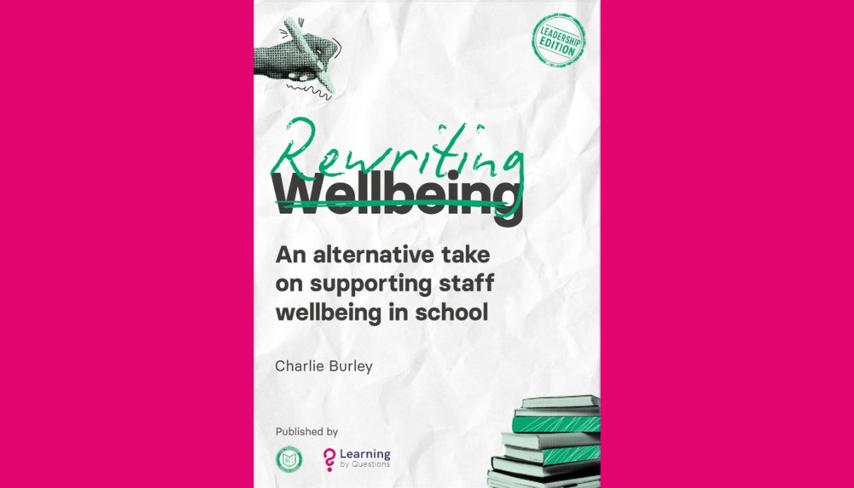
This blog is a preview of Charlie’s free downloadable leadership handbook, in collaboration with Learning by Questions. Inside, you’ll find the auditing questions, practical actions, quick wins and real case studies to successfully implement the 6Cs of Charlie’s wellbeing framework. It’s a headteacher’s guide to building a sustainable, human-first school.
Rewriting Wellbeing for leaders
Download for Charlie's full top-down framework for whole-school wellbeing shift.
Your download should open automatically, but if not, you can open the file manually. Be sure to join our mailing list for more insightful content.
The 6Cs of staff wellbeing: a preview of Charlie’s leadership framework
Sustainable wellbeing moves away from pizza parties and towards a strategic framework built on six interconnected pillars: Care, Capacity, Clarity, Competency, Connection, and Contribution.
Here is a preview of the handbook: the six most impactful shifts you can make as a leader.
1. Care: the visible proof that wellbeing matters
The care that matters is found in meaningful actions you take as a leader: enabling staff self-care, normalising wellbeing as a priority, and modelling it from the top. It’s how you respond when someone struggles.
Why Care is a foundational strategy
Care is the bedrock for the other Cs. If staff don’t feel genuinely appreciated, nothing else clicks. When care is real, trust grows, commitment increases, and staff choose to support each other.
Some questions to ask yourself might be:
- Is there a process for routinely checking in on staff wellbeing?
- When someone is struggling, do they know what to do next?
- How does the school environment support emotional regulation?
2. Capacity: protecting staff time and energy
Capacity is about whether school systems protect the time and energy of you and your staff. It centres on workload, streamlined processes, and realistic expectations, especially around academic pinch points.
Why Capacity is a foundational strategy
Without capacity, staff lack the headspace to do their best work. In turn, this affects your workload and capacity as a leader. Schools where capacity is prioritised and protected benefit from fewer staff absences, boosted morale, regulated behaviour, and an uptick in staff retention.
Some questions to ask yourself might be:
- How much do we ask of staff outside their contracted hours?
- Are deadlines and events evenly spaced out?
- Are staff asked for their feedback on workload? Do we act on it?

3. Clarity: creating certainty, reducing stress
Clarity means setting clear expectations that are easy to understand and act on. It involves timely communication, concrete procedures, early notice of changes, and policies in one place.
Why Clarity is a foundational strategy
Clarity is the key to psychological safety for everyone in school. When staff know what’s expected (and why) anxiety drops, the school runs smoothly, and there’s alignment for all. As a leader, it means less time spent firefighting: everyone is on the same page.
Some questions to ask yourself might be:
- Is it clear to each person what's expected of them in their role?
- Does communication arrive with reasonable notice, wherever possible, or too late to act on?
- Are decisions and their reasons explained?

4. Competency: feeling skilled, supported, and confident
Competency manifests as staff feeling skilled, supported, and confident. It’s built through staff-led CPD, peer observation, mentoring, and knowing there’s someone to ask for help, without fear of judgement.
Why Competency is a foundational strategy
As competency grows, so does the sense of staff pride and ownership. With a leader who values competency, staff feel effective, autonomous and confident enough to share good practice and seek guidance. Staff who are neglected in this area may feel undervalued and reluctant to take initiative.
Some questions to ask yourself might be:
- Are people mostly asked to do tasks that match their training?
- Can staff learn from each other through observation or coaching?
- When someone has a question about their role, is support easy to find? Do they feel safe to ask for it?
Quick wins for your school
Get Charlie's 6C wellbeing framework and his tips on school-wide implementation.
Your download should open automatically, but if not, you can open the file manually. Be sure to join our mailing list for more insightful content.
5. Connection: trust, belonging, and genuine community
Connection is the feeling of being on the same team. It’s nurtured through informal interactions, buddy systems, peer mentoring, and forums where staff can speak honestly and actually be heard.
Why Connection is a foundational strategy
Leaders who value genuine connection help their teams build bonds under pressure and collaborate well. (We’re a social species, after all!) When connection breaks down, gossip, gaslighting, and subtle side-eyes become the standard.
Some questions to ask yourself might be:
- Are there chances to connect beyond formal meetings?
- Is there a buddy or peer-support system people actually use?
- Can staff share ideas or concerns without fear of being judged or dismissed?
6. Contribution: recognition, purpose, and staff voice
Contribution is about everyone in school feeling that what they do genuinely matters. It’s public gratitude, celebrating success, and giving staff the chance to lead projects linked to their strengths and passions.
Why Contribution is a foundational strategy
When staff feel they’re making a contribution, engagement increases, and a culture of “playing your part” embeds. Staff feeling they’re having an impact that moves the school forward (without the need for empty platitudes) is absolutely central to improving wellbeing.
Some questions to ask yourself might be:
- Can staff use their strengths or work on things they care about?
- Do staff feel trusted to make professional judgements?
- Is recognition specific and sincere, or generic and tokenistic?

If you’re looking for ways to separate work from your self-worth as an educator, check out Charlie’s practical advice in his blog on prioritising mental health as a teacher by redefining productivity and self-care.
Your real-life leadership handbook for wellbeing awaits
Charlie’s six interconnected pillars form a powerful framework for sustainable cultural change. They prove that moving from burnout to belonging is deeply rooted in focus, courage and systemic care.
Inside the Rewriting Wellbeing downloadable, you’ll get:
- The complete 6Cs framework with detailed leadership questions.
- Quick-win audits for each pillar.
- Practical templates for check-ins, communication policies, and amplifying staff voice from real schools.
- Real-life case studies showing what successful implementation might look like.
Your download should open automatically, but if not, you can open the file manually. Be sure to join our mailing list for more insightful content.